
Design could save lives
Helping the Syrian people know they are not alone...
Project Overview
Objective
Design a tool for Syrian citizens to report war-related incidents in real-time, allowing them to react quickly and find safety. Additionally, the tool aimed to raise international awareness of the challenges Syrians face.
Problem
WhatsApp groups were being used to broadcast alerts, but critical messages often got lost in the flood of conversations. Additionally, cellular networks were unreliable, leaving citizens without a dependable way to communicate during dangerous situations.
Target Audience
Syrian citizens and the global community.
My Role
UX Designer, Researcher, UI Designer: Responsible for designing the app from scratch, mapping out features, and collaborating closely with developers to solve technical challenges.
01
Problem Statement
The goal was to create a reliable channel for Syrian citizens to report and receive alerts as quickly and clearly as possible to help them avoid danger and safeguard their families.
The project relied on feedback from a single Syrian representative, so understanding the broader user base was limited. Additionally, the challenge of what to do during cellular network outages needed to be addressed.
02
Research &
Design Process
Conducted interviews and virtual information sessions to better understand the urgency of alerts and how they should be delivered.
The research showed that timing and clarity were critical, as even a few seconds could make the difference between life and death.
Created wireframes, user flows, and prototypes to validate the design.
Design Thinking process: Empathize, Define, Ideate, Prototype.
Tools Used: MindNode, Adobe XD, Illustrator, Photoshop Overflow.io, Google Slides, Zoom.
Challenges:
Technical Challenge: The most significant obstacle was determining how to ensure alerts could be sent even when there was no internet connection.
Time Constraints: Solution needed to be delivered in the lest time frame possible.
03
The Solution
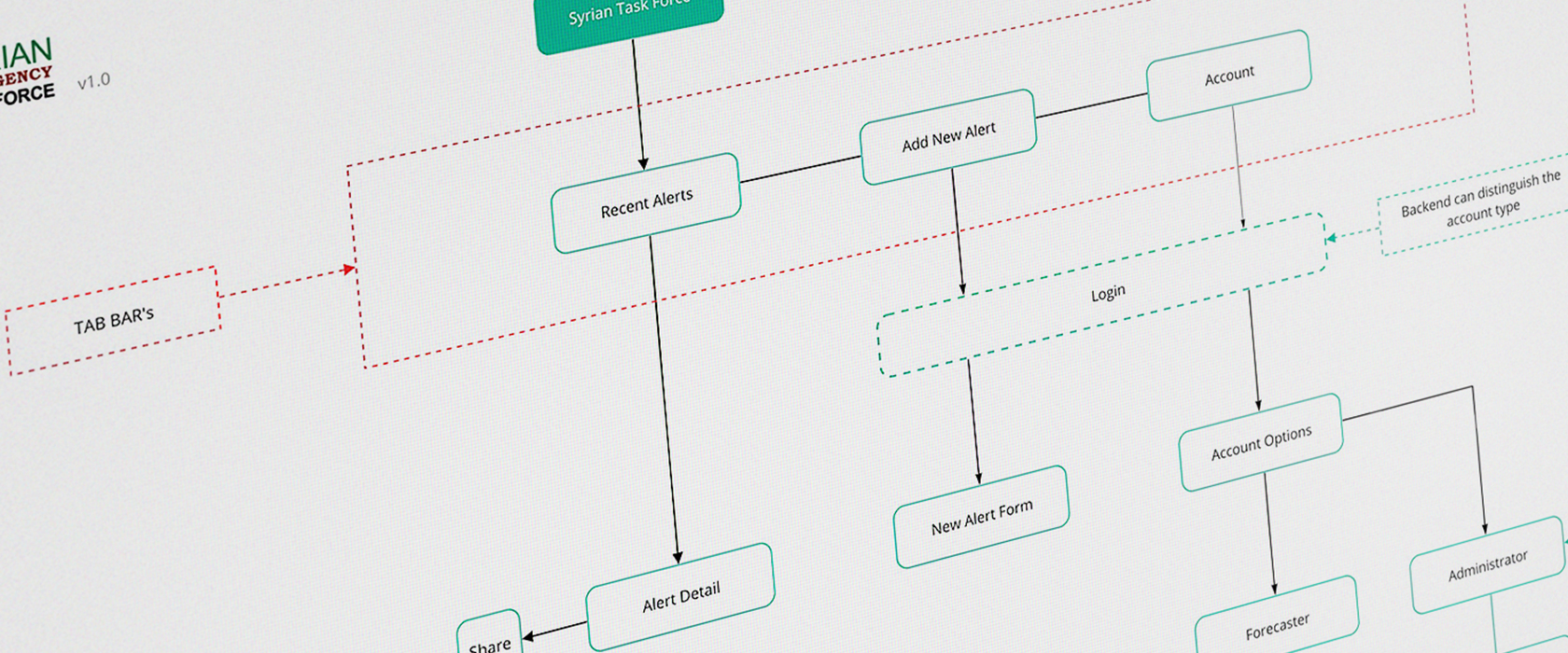
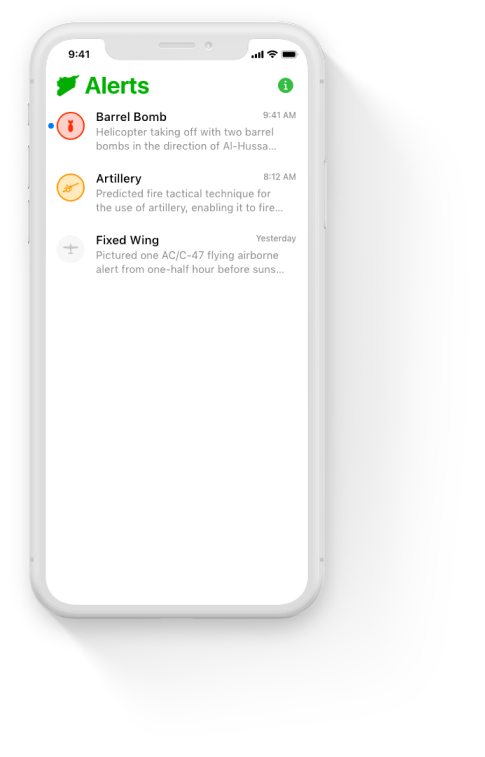
The final app had a simple interface with two sections:
- One for viewing a list of recent alerts, and
- Another for creating new alerts that is hidden only authorized citizens have that permission.
To streamline the alert creation process, the form was simplified:
- Users could either input text or record a voice message, with the keyboard open immediately to reduce friction.
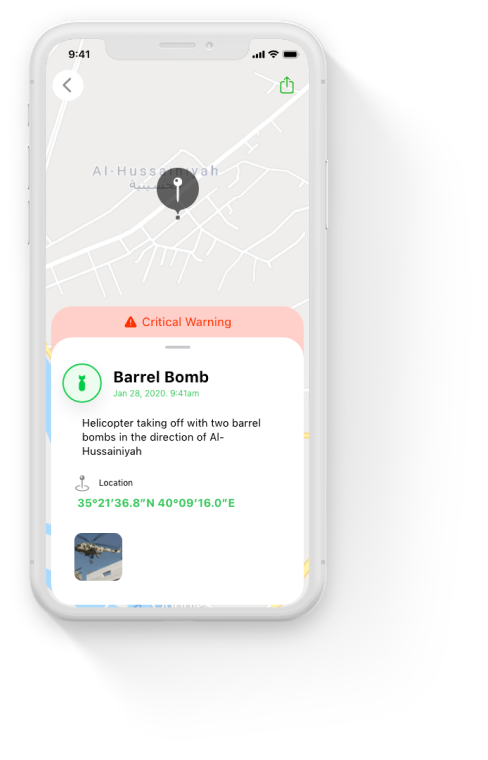
- Alerts were categorized by warning levels (Low, Medium, High) and types of danger (Barrel bomb, Artillery, Chemical, etc.).
- Additional options allowed users to attach media (photos, videos, voice messages) or provide the location of the danger.
A basic alert could be created and sent within 20 seconds, and if the user had no internet connection, the alert would be sent via SMS.
Also the app is capable to collect donatives from other parts of the world to help the cause and drag attention over the Syrians situation.
04
Takeaways
UX and UI design can literally save lives: This project highlighted how design simplicity is key in high-stakes environments, where every second counts.
I learned how to reduce complexity and focus on essential features to meet user goals effectively.
In future iterations, I would explore integrating newer technologies and further simplifying the interface for even faster interactions.